Skype Conference – Fletcher School

Skype conference.png

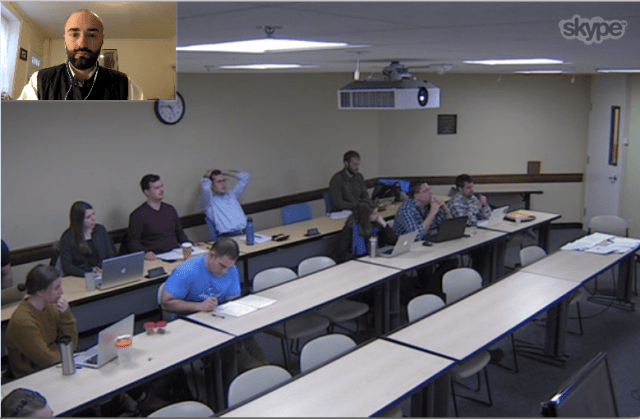
Thanks to Dr. Elizabeth Prodromou and her students for a great discussion about geopolitics of religion, critical geopolitics and terrorism, Eurasia and security.

Syllabus of the course:

EURASIA: GEOPOLITICS, RELIGION, AND SECURITY

This course explores the intersection of geography, religion, and security in the transregional, transcontinental space of Eurasia, a playing field where Western (mainly defined in terms of NATO and the EU) and Eastern (primarily understood in terms of Russia and its near abroad) are perceived to collide in a zero-sum game. We begin with an introduction to the rediscovery of the tradition of geopolitics as field in IR theory, and we explore the centrality of Eurasia to geopolitical arguments about global hegemony…

Continue reading.

March 31, 2017

Conférence – Grèce : le pluralisme religieux au défi de la crise migratoire

logo_ens.png

Résumé : La Grèce revient régulièrement sur le devant de la scène médiatique. La crise économique et financière, ainsi que la crise migratoire qui touchent ce pays du sud-est européen ont mis en lumière la place complexe du fait religieux, la gestion difficile du pluralisme des croyances, en ces terres majoritairement orthodoxes. Tiraillée entre repli identitaire et action humanitaire, la Grèce aujourd’hui tente de faire face à la question migratoire alors même que les pouvoirs publics ne cessent de revisiter le statut symbolique et légal de l’Église orthodoxe. Réforme de l’enseignement de la religion à l’école, rémunération du clergé par l’Etat, etc. la montée du pluralisme religieux en Grèce est perçue comme une dimension de la sécularisation promue dans le contexte européen. Cependant, la crise migratoire constitue-t-elle un danger de plus en faveur du renforcement du pluralisme religieux ou un défi pour l’Église orthodoxe de dépasser les crispations identitaires au travers de son engagement humanitaire ?

15 mars 2017, Groupe IRENE/Ecole Normale Supérieure

IRIS Note – Prof. M. Abu-Nimer

Engaging Interreligious Peacebuilding Agencies and Policy Makers in Responding to Conflicts: Beyond the Rhetoric

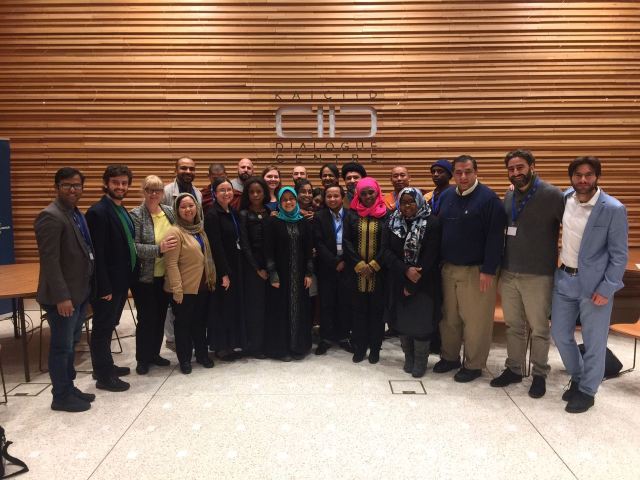
The recent polarization in many parts of the world has motivated policy makers and religious institutions to begin taking more seriously the potential constructive role that religion and its various agencies can take in responding to violent extremism, and in contributing to building stronger social cohesion in divided societies. Various agencies in the European Union, United Nations, and intergovernmental donors such as the United States Agency for International Development (USAID); the Department for International Development (DFID); Swedish International Development Cooperation Agency (SIDA); etc. have begun engaging in partnerships with organizations (such as the International Dialogue Centre (KAICIID)) who can assist them in engaging local religious agencies in their programing. Obviously faith‐based development and humanitarian relief organizations have been working in the area of promoting diversity, pluralism, and peacebuilding for at least two decades.

Continue reading.

Observatoire géopolitique du religieux, IRIS, February 2017

Religion in US Diplomacy – Interview with Dr. Elizabeth Prodromou

By Nicolas Kazarian

Observatoire géopolitique du religieux, IRIS, January 2016

How did you become Vice Chair and Commissioner on the U.S. Commission on International Religious Freedom (2004-2012)?

I was appointed for eight years as a Commissioner, and served four consecutive two-year terms. There are nine Commissioners, who are private citizens. Three of them are always selected by the President, two are selected by the President’s party and Congress, and four are selected by Congressional leaders of the party not in the White House. I was appointed in 2004, during the Bush Administration, by Congresswoman Nancy Pelosi, who was the House Minority Leader at the time; when President Obama was elected, I was reappointed for two more terms, by Nancy Pelosi, who had become the Speaker of the House..

Continue reading.

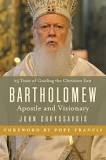
Book Review -John Chryssavgis, Bartholomew, Apostle and Visionary

index

 Writing History With H.A.H. Ecumenical Patriarch Bartholomew

History is a process which starts from an event, entering memory before being written down through a painstaking effort of abstraction. In the case of Fr. John Chryssavgis’s book, the event is a person, the memory is an inspiration, and history is the global destiny of H.A.H. Ecumenical Patriarch Bartholomew, to whom this biography is consecrated. A quote from Churchill used in the book – “The farther back you can look, the farther forward you are likely to see” – echoes a central aspect of the Ecumenical Patriarch’s identity: he stands at the crossroads of past and future, leading the Orthodox Church into the third millennium, reminding the world of the eschatological nature of the Church: at the crossroads of time, but also of space, “being in the world, yet not of the world.”

Continue reading.